View standardized performance here:
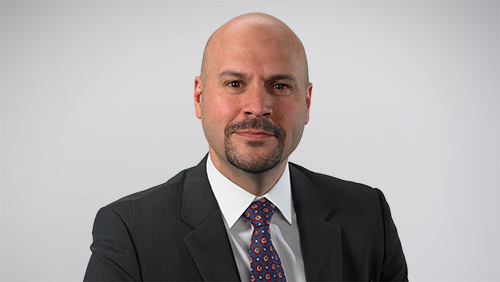
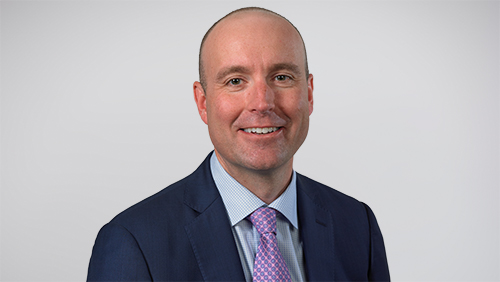
Michael Kops: Hello, I'm Michael Kops from Heartland Advisors. Today, I'm joined by Will Nasgovitz, Portfolio Manager for the Value Fund.
Will, what went on in small-cap value this quarter?
Will Nasgovitz: Well, in the fourth quarter of 2025, small-cap value actually had a really strong performance relative to large-cap securities. The Russell 2000® Value outpaced the S&P 500. I think there were a couple reasons for that. What really stands out to me, which has been covered quite a bit is this high degree of concentration in large cap securities.
I think that's just raised the bar for those securities. Expectations are high. That sometimes leads to challenging stock returns. I think investors are recognizing that there's other opportunities out there, and that leads to the second dynamic that played out that really helped small-cap value, that the fundamentals in small-caps continue to improve. I think it was the first time in three years or more where small-cap earnings growth was faster than large-cap securities. And I think a couple reasons are driving that.
Small-caps, generally speaking, have more leverage, more debt. That's something we care a lot about. One of our 10 Principles of Value Investing™ is financial soundness. So we pay attention to that. But generally speaking, again, small-caps have more leverage and the Fed cut rates three times last year, and that's lowered the cost of those interest payments, which has helped the bottom line. And there's a chance of additional Fed cuts in 2026 so that that tailwind could continue.
And I think, too, there's been less regulation. The Trump administration has put a focus on this, and I think that helps all businesses, but I think on a per capita or pound-for-pound basis, it helps smaller businesses. And I think that's really improved or helped improve the fundamentals that we saw in terms of that better earnings growth for small caps, relatively large, from the most recent quarter.
Mike: Great. So would you say what happened in Q4, did it increase your conviction, or did it challenge your confidence? How do you feel now?
Will: My confidence remains high because when we look at our universe of opportunities out there, whether it's existing holdings or potential holdings, despite you know a strong quarter, despite a strong year for equities, there's a lot of opportunities out there, unexploited opportunities, I think, in the small-cap universe. That match up well with our 10 Principles.
Mike: So the Fund lagged just a bit in the quarter, what would you attribute it to?
Will: Well, despite having positive security selection in the majority of the sectors, we really performed poorly within Health Care. And, you know, two things stand out there where we had some businesses that reported their Q3 earnings.
So early on, the fourth quarter, where either the quarter was disappointing or their guidance was disappointing that led to subsequent price depreciation. And then we also had some whole things where there were some unexpected changes in the C-suite, and that creates uncertainty, and that leads to, you know, price depreciation as well.
So that really, unfortunately, Health Care was a black eye for us in the most recent quarter.
Mike: Got it. Okay. Well, can you give us maybe a little bit of color on any specific holding in the portfolio?
Will: Sure. Within Health Care, we own a company called IT, or the ticker is ITGR, and it's a Health Care distributor. And it's actually a unique circumstance of their underperformance. It was down significantly in the quarter. We saw a subsequent significant amount of insider buying, which really encourages us.
But they gave guidance for their subsequent fiscal year, not for their current one, for the subsequent fiscal year, which is unique, even though they weren't at that time, usually what companies do that, they do the start of the year, for instance, or when they close out the year and despite calling for still growth it was lower growth level than the market was anticipating and so the stock was you know penalized significantly. We think the fact that they got that bad news if you want to call it bad news out of the way coupled with insider buying its an intriguing setup we think for 2026 and beyond potentially.
Mike: Any other stocks you want to comment on?
Will: In Health Care?
Mike: Dealer's choice.
Will: Well, we, you know, I look at the performance, you know, despite lagging in for the quarter, you know, we did see, as I mentioned, positive security selection in a number of groups, you know, Technology was quite strong. Like the Semi cap group was, was positive for us. We saw that at Industrials too, some of our Commercial Services companies did well. In REITs, we did well, which was great. We had another buyout there. I think it follows either Q2 or Q3, where we had Plymouth acquired, in the fourth quarter we had ALEX acquired.
I think that just really brings to life a value in our portfolio holdings. And that particular example, ALEX, I think is really interesting because that was on our watch list. We passed on it because we wanted to see the catalyst develop. They had a non-core asset that we wanted to see them sell. They did that when we revisited it, and our shareholders were subsequently awarded by a buyout in the fourth quarter in REITs or in Real Estate.
Mike: Excellent. And how about the outlook for 26?
Will: I'm encouraged for the outlook for small caps in particular to reference the fundamentals. You know, you can even want to expand on that even further. A lot of businesses have faced some challenges. They always do. But we touched on interest rates. That potentially turned into a tailwind. Inflation seems to be moderating, too. You go back even further, you know, the kind of the COVID-related overhang a lot of businesses had, whether it was too many inventories because demand was so strong in 2021 and then having and deal with too much inventories and uncertainty around the demand trend in 22, 23, and 24, and 25. That seems to be normalizing and supply chains are better.
So I just think there's a lot of cyclicals that aren't necessarily caught up in this AI trade, which we have exposure to, but cyclicals that haven't participated for all the things I mentioned that. I think the expectations for these businesses are quite low. And there's a light at the tunnel in terms of business in general getting better. We like to look at the ISM for instance, it's been below 50 for since, several quarters, several years now, really, a few years at least. And that's been basing along, and I think that sentiment is going to improve here because of the less regulation, maybe a little bit better demand trend. And that's going to really be a positive for many of these cyclicals that have not benefited like some other AI-oriented businesses.
Mike: Excellent. Any other final thoughts you might want to share before we wrap it up?
Will: I would just encourage people to continue to look at the small-cap marketplace. I think there's a lot of opportunities there. I think it's, we've shared this in the past where the exposure to small cap from an investor allocation standpoint might be at all time lows ever. And I think that just is really intriguing to me. There's an unloved asset class that's still relatively undervalued.
Mike: Excellent. Thanks, Will. Appreciate it.
Will: Yep.


©2026 Heartland Advisors | 790 N. Water Street, Suite 1200, Milwaukee, WI 53202 | Business Office: 414-347-7777 | Financial Professionals: 888-505-5180 | Individual Investors: 800-432-7856
In the prospectus dated 5/1/2026, the Gross Fund Operating Expenses for the investor and institutional classes of the Value Fund are 1.09% and 0.94%, respectively.
Past performance does not guarantee future results. Performance represents past performance; current returns may be lower or higher. Performance for institutional class shares prior to their initial offering is based on the performance of investor class shares. The investment return and principal value will fluctuate so that an investor's shares, when redeemed, may be worth more or less than the original cost. All returns reflect reinvested dividends and capital gains distributions, but do not reflect the deduction of taxes that an investor would pay on distributions or redemptions. Subject to certain exceptions, shares of a Fund redeemed or exchanged within 10 days of purchase are subject to a 2% redemption fee. Performance does not reflect this fee, which if deducted would reduce an individual's return. To obtain performance through the most recent month end, call 800-432-7856 or visit heartlandadvisors.com.
An investor should consider the Funds’ investment objectives, risks, and charges and expenses carefully before investing or sending money. This and other important information may be found in the Funds' prospectus. To obtain a prospectus, please call 800-432-7856 or visit heartlandadvisors.com. Please read the prospectus carefully before investing.
As of 12/31/2025, Alexander & Baldwin, Inc. (ALEX), Integer Holdings Corporation (ITGR), and Plymouth Industrial REIT, Inc. (PLYM) represented 0.93%,1.55%, and 0.74% of the Value Fund’s net assets, respectively.
The Fund’s performance information included in regulatory filings includes a required index that represents an overall securities market (Regulatory Benchmark). In addition, the Fund's regulatory filings may also include an index that more closely aligns to the Fund's investment strategy (Strategy Benchmark(s)). The Fund's performance included in marketing and advertising materials and information other than regulatory filings is generally compared only to the Strategy Benchmark.
Value investments are subject to the risk that their intrinsic value may not be recognized by the broad market.
The Value Fund primarily invests in mico- and small-cap companies selected on a value basis. Such securities generally are more volatile and less liquid than those of larger companies.
The Value Fund seeks long-term capital appreciation through investing in small companies.
The future performance of any specific investment or strategy (including the investments discussed above) should not be assumed to be profitable or equal to past results. The performance of the holdings discussed above may have been the result of unique market circumstances that are no longer relevant. The holdings identified above do not represent all of the securities purchased, sold or recommended for the Advisor’s clients.
Statements regarding securities are not recommendations to buy or sell.
Portfolio holdings are subject to change. Current and future holdings are subject to risk.
Investing involves risk, including the potential loss of principal.
In certain cases, dividends and earnings are reinvested.
The Heartland Funds are distributed by ALPS Distributors, Inc.
The statements and opinions expressed in the articles or appearances are those of the presenter. Any discussion of investments and investment strategies represents the presenters' views as of the date created and are subject to change without notice. The opinions expressed are for general information only and are not intended to provide specific advice or recommendations for any individual. Any forecasts may not prove to be true.
Economic predictions are based on estimates and are subject to change.
There is no guarantee that a particular investment strategy will be successful.
Sector and Industry classifications are sourced from GICS®. The Global Industry Classification Standard (GICS®) is the exclusive intellectual property of MSCI Inc. (“MSCI”) and S&P Global Market Intelligence (“S&P”). Neither MSCI, S&P, their affiliates, nor any of their third party providers (“GICS Parties”) makes any representations or warranties, express or implied, with respect to GICS or the results to be obtained by the use thereof, and expressly disclaim all warranties, including warranties of accuracy, completeness, merchantability and fitness for a particular purpose. The GICS Parties shall not have any liability for any direct, indirect, special, punitive, consequential or any other damages (including lost profits) even if notified of such damages.
Heartland Advisors defines market cap ranges by the following indices: micro-cap by the Russell Microcap®, small-cap by the Russell 2000®, mid-cap by the Russell Midcap®, large-cap by the Russell Top 200®.
Because of ongoing market volatility, performance may be subject to substantial short-term changes.
Dividends are not guaranteed and a company’s future ability to pay dividends may be limited. A company currently paying dividends may cease paying dividends at any time.
There is no assurance that dividend-paying stocks will mitigate volatility.
Russell Investment Group is the source and owner of the trademarks, service marks and copyrights related to the Russell Indices. Russell® is a trademark of the Frank Russell Investment Group.
The above individuals are registered representatives of ALPS Distributors, Inc.
Heartland’s investing glossary provides definitions for several terms used on this page.