View standardized performance here:
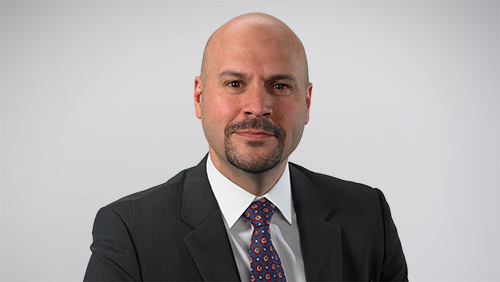
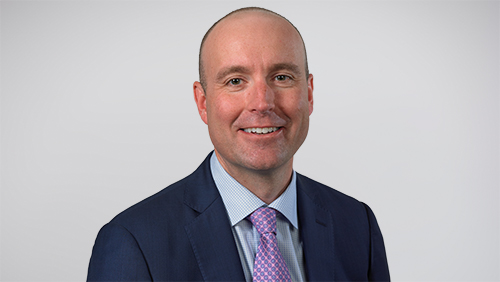
Michael Kops: Hello, I'm Michael Kops from Heartland Advisors. Today, I'm joined by Will Nasgovitz, Portfolio Manager for the Value Fund.
Will, how would you describe the small-cap landscape in Q1?
Will Nasgovtiz: We saw a really strong performance, at least for small value.
The Russell 2000® Value Index was up nearly 5%. So that's a good absolute number. The relative performance was even more impressive. The S&P 500 was down just over 4%. So quite a divergence in performance year to date, thus far. So, it's really quite encouraging.
Michael: Excellent. And I know there was some volatility. When we see volatility like this, how does it make you think about the portfolio and your holdings versus your watch list?
Will: That's a great question. I think it's a balancing act of trying to keep in mind portfolio needs from like a sector industry standpoint, making sure that we're not too overweight or too underweight, and understanding those risks associated with that. And when there's volatility, you know, opportunities present themselves that can help us fill a need with something that's on the watch list. But anything on the watch list has to compete with what we own today from a risk reward standpoint.
So, just because we think it's a really compelling opportunity, we need to balance that relative to what we own today. Maybe it just makes more sense to add to something that's been beaten up in this volatility, perhaps that we saw in the first quarter versus adding a new name.
Michael: Sure. So how helpful is it for you to have the four price targets kind of at your fingertips when these moments arise?
Will: It's super helpful. For us, it comes down to expectations. We came into the year, everyone thought the Fed would be cutting rates. We talked about that probably as a catalyst for small cap stocks last quarter, or maybe even for this podcast. And that's completely changed, right? We don't control that. We don't know how it's all going to play out throughout the rest of the year, but the price targets help us calibrate that risk. And I think it helps us think about, you know, the risk reward in terms of the upside and the downside. And when we get to those moments of extreme volatility to look at the needs of the portfolio and say, well, this skews a lot better based on our risk reward. Let's add to this versus add to something else.
Michael: Yeah, it's interesting. I hear you talk about it a lot amongst the team. And it's when you have these moments come along, like you said, maybe six months ago, the skews looked a certain way for some range of outcomes. And now that subset of outcomes is totally different than what you thought it was going to be, but you still have all these range of outcomes built in.
Is there, was there an example in the quarter where you were able to take action on anything based on that information?
Will: Nothing really jumps out to me right now. I mean, we had some adds in the portfolio where we've been trying to focus on building some of those smaller positions.
Michael: Okay.
Will: Right. That we want to get to minimum like 50 basis point positions and the volatility and the downdraft that we saw associated with the conflict in Iran or, you know, that was associated with AI and what that was doing to some businesses allowed for us to build those positions up to more of that appropriate level. But nothing specific really stands out to me in terms of.
Michael: In terms of like a big change.
Will: Right.
Michael: Yeah.
Will: Yeah.
Michael: Got it. Understood.
Well, there was a nice outperformance for the quarter. The Fund picked up 7.35% versus just under 5%, as you mentioned, for the benchmark.
So now you have a solid quarter, which, you know, we try not to get hung up on the short-term, but here we are reporting how the quarter went.
Will: Right.
Michael: But we also, of course, want to think about the long-term, but over kind of most of the meaningful, measurable timeframes, you're beating.
So, it's a lot to be proud of, but maybe you could share a little bit about what drove the short-term outperformance and then comment longer term.
Will: That's a good question. And there's some overlap there.
We want to beat, with, you know, by utilizing our 10 Principles of Value Investing™. That's our edge. And that we will see that through security selection, and we saw that in Q1 here, where if you look at a sector attribution, we had positive security selection in 8 of 11 sectors. And that's what we want to do. That type of performance we've seen on the one, three, five-year basis too. And that's what we want to do going forward. And where we lagged from a security selection standpoint, the standout or the one with the black eye would be in Energy and that didn't surprise us.
I mean in the quarter we saw a rapid appreciation in oil prices associated with the conflict, we do stress testing in the portfolio, we knew that was a risk to the portfolio. You might question why did we not act on that. Well we have other commodity risk in the portfolio we just didn't think it made sense to, add additional commodity risk in the portfolio we'll see how this all plays out. We have found some opportunities to address that need in the portfolio in terms of that underweight of Energy particularly on the Energy Services side as we kicked off here in Q2 where we would pick off some names that have lagged this rally in the group here to help mitigate that risk in the portfolio going forward. But overall, we want to continue to win with security selection and that's really what the 10 Principles of Value and Investing™ does for us.
Michael: Excellent. Okay, so with that in mind, is there a specific holding that you think is interesting you'd like to share a little color?
Will: I think one that's topical because it fits with the Energy landscape is Allegiant Airlines (ALGT). We've owned this in the past. We own in the Value Fund going back, coming out of the great financial crisis in 2010. So it fits with an example of that institutional knowledge that we have at the organization. It was a great contributor for our shareholders back then. We've been monitoring from periphery for well over 10 years. And we were on the sidelines on it because they de-worsified their business, if that's a word, where they launched the endeavor to build a hotel in Florida, starting in 2017. You know, running airlines hard enough, launching a hotel at a very competitive market can be very challenging too. Then you throw in COVID into the mix and all the uncertainty associated with that.
They learned from that, they moved on from that, and that was a catalyst for us to initiate a position last year. And clearly there's a headwind for them in terms of the fuel costs have gone up significantly with the rise in oil prices. Interestingly they gave guidance, they updated their guidance in the first quarter where they came in stronger than anticipated because demand is quite quite strong for them. The markets look through that because they're understanding, you know, the need or the challenges associated with fuel. We think they'll get through that. Their very unique model in that they operate in markets where there's not a lot of competition the vast majority where their flights have zero non-stop competition. So they have actually a bit of a moat around their business. Which is quite interesting in the airline space. So we think that they're going to navigate this fuel challenge and continue to focus on their core business and see their margins expand to align with a competitor like Ryanair in Europe. And we could see significant multiple expansion in the story. So while it's worked for us the near term, you know, it's appreciated nicely and in the face with the sell-off associated with oil, we still see a lot of upside at Allegiant longer term.
Michael: Sounds like a classic self-help example.
Will: Right.
Michael: Yeah. Great. Okay. So what are you looking out for now as we head into Q2 and the rest of the year? What's on your mind?
Will: I think it's similar to the prior commentary that we had here where there's just still a lot of opportunities in some of the cyclical areas of the market that have yet to be exploited by investors because we've just been in this period of uncertainty associated on the political front, geopolitical front, interest rate front, commodity front, AI front, COVID front, etc. And a lot of these businesses have yet to see inflections, but it's starting to happen. You can see it's some of the macroeconomic data, for instance, like the ISM, you know, getting above 50, it's set back here most recently. But a lot of businesses that are tied to that have yet to see the market appreciation, if you will, and we're picking off those opportunities. So it's a continuation of what we've talked about in the past. We're going to eventually have a broader economic cycle. We want to be on the front of that by positioning the portfolio to capitalize on those opportunities that are screened well relative to our 10 Principles.
Michael: Excellent. Any final thoughts?
Will: I know we're excited about the opportunity set out there. We want to capitalize on the volatility that presents itself. We think we've got the game plan to do that by sticking to our knitting with the 10 Principles of Value Investing™ and using those tools from a portfolio construction standpoint in reference to stress testing around commodities, etc. We think that, again, is the recipe for us to win with the 10 Principles.
Michael: Excellent. Thank you so much, Will.
Will: Thank you.


©2026 Heartland Advisors | 790 N. Water Street, Suite 1200, Milwaukee, WI 53202 | Business Office: 414-347-7777 | Financial Professionals: 888-505-5180 | Individual Investors: 800-432-7856
In the prospectus dated 5/1/2026, the Gross Fund Operating Expenses for the investor and institutional classes of the Value Fund are 1.09% and 0.94%, respectively.
Past performance does not guarantee future results. Performance represents past performance; current returns may be lower or higher. Performance for institutional class shares prior to their initial offering is based on the performance of investor class shares. The investment return and principal value will fluctuate so that an investor's shares, when redeemed, may be worth more or less than the original cost. All returns reflect reinvested dividends and capital gains distributions, but do not reflect the deduction of taxes that an investor would pay on distributions or redemptions. Subject to certain exceptions, shares of a Fund redeemed or exchanged within 10 days of purchase are subject to a 2% redemption fee. Performance does not reflect this fee, which if deducted would reduce an individual's return. To obtain performance through the most recent month end, call 800-432-7856 or visit heartlandadvisors.com.
An investor should consider the Funds’ investment objectives, risks, and charges and expenses carefully before investing or sending money. This and other important information may be found in the Funds' prospectus. To obtain a prospectus, please call 800-432-7856 or visit heartlandadvisors.com. Please read the prospectus carefully before investing.
As of 3/31/2026 Allegiant (ALGT) represented 1.37% of the Value Fund’s net assets. Ryanair Holdings plc (RYAAY) is unowned by the Value Fund.
The Fund’s performance information included in regulatory filings includes a required index that represents an overall securities market (Regulatory Benchmark). In addition, the Fund's regulatory filings may also include an index that more closely aligns to the Fund's investment strategy (Strategy Benchmark(s)). The Fund's performance included in marketing and advertising materials and information other than regulatory filings is generally compared only to the Strategy Benchmark.
Value investments are subject to the risk that their intrinsic value may not be recognized by the broad market.
The Value Fund primarily invests in mico- and small-cap companies selected on a value basis. Such securities generally are more volatile and less liquid than those of larger companies.
The Value Fund seeks long-term capital appreciation through investing in small companies.
The future performance of any specific investment or strategy (including the investments discussed above) should not be assumed to be profitable or equal to past results. The performance of the holdings discussed above may have been the result of unique market circumstances that are no longer relevant. The holdings identified above do not represent all of the securities purchased, sold or recommended for the Advisor’s clients.
Statements regarding securities are not recommendations to buy or sell.
Portfolio holdings are subject to change. Current and future holdings are subject to risk.
Investing involves risk, including the potential loss of principal.
In certain cases, dividends and earnings are reinvested.
The Heartland Funds are distributed by ALPS Distributors, Inc.
The statements and opinions expressed in the articles or appearances are those of the presenter. Any discussion of investments and investment strategies represents the presenters' views as of the date created and are subject to change without notice. The opinions expressed are for general information only and are not intended to provide specific advice or recommendations for any individual. Any forecasts may not prove to be true.
Economic predictions are based on estimates and are subject to change.
There is no guarantee that a particular investment strategy will be successful.
Sector and Industry classifications are sourced from GICS®. The Global Industry Classification Standard (GICS®) is the exclusive intellectual property of MSCI Inc. (“MSCI”) and S&P Global Market Intelligence (“S&P”). Neither MSCI, S&P, their affiliates, nor any of their third party providers (“GICS Parties”) makes any representations or warranties, express or implied, with respect to GICS or the results to be obtained by the use thereof, and expressly disclaim all warranties, including warranties of accuracy, completeness, merchantability and fitness for a particular purpose. The GICS Parties shall not have any liability for any direct, indirect, special, punitive, consequential or any other damages (including lost profits) even if notified of such damages.
Heartland Advisors defines market cap ranges by the following indices: micro-cap by the Russell Microcap®, small-cap by the Russell 2000®, mid-cap by the Russell Midcap®, large-cap by the Russell Top 200®.
Because of ongoing market volatility, performance may be subject to substantial short-term changes.
Dividends are not guaranteed and a company’s future ability to pay dividends may be limited. A company currently paying dividends may cease paying dividends at any time.
There is no assurance that dividend-paying stocks will mitigate volatility.
Russell Investment Group is the source and owner of the trademarks, service marks and copyrights related to the Russell Indices. Russell® is a trademark of the Frank Russell Investment Group.
The above individuals are registered representatives of ALPS Distributors, Inc.
Heartland’s investing glossary provides definitions for several terms used on this page.