Markets are usually efficient, but they are not always perfectly perceptive. Businesses can become misunderstood when headlines, short-term earnings pressure or shifting investor narratives dominate attention. Our job is to determine whether the market’s perception matches the underlying reality of the business.
That is where our analysis begins. We use quantitative work to identify potential disconnects, but numbers alone are not enough. We want to understand what is happening inside the business, how management is responding, and whether the market is overreacting to short-term pressure or correctly discounting a lasting change.
Miller Industries (MLR) is a good example of that process in action.
We first met with Miller Industries’ management team at a conference in August 2023. The business immediately stood out because of Miller’s dominant competitive position in tow trucks and car carriers. That position gave Miller scale advantages in production, purchasing and distribution that can’t be easily replicated by smaller competitors.
After our initial work, we liked the business but not the valuation as the stock appreciated and no longer met our quantitative discipline. So, we decided to put it on the watch list.
The opportunity became more interesting after the stock pulled back sharply from prior highs. As a result, the stock scored well with the quantitative factors in our 10 Principles of Value Investing™ including Low P/E, Low P/CF, Low P/B, but cheapness alone was not enough. Why did the stock become attractive from a price perspective, and how did it fit in our value investing process?
MLR had overproduced relative to demand leaving dealer inventories elevated. As dealers worked through excess inventory, Miller reduced production which caused EPS to decline meaningfully.
The key question was whether the decline in earnings was temporary or a sign that the company’s profitability had structurally changed?
Through our in-depth review, we believed dealer inventories were improving. At the same time, Miller was putting greater emphasis on the military market, which seemed to be a successful strategy evidenced by recent contract wins. This was timely as many countries increased defense budgets and recovery vehicles were needed in battle to remove disabled or damaged assets.
Then the company announced a $100 million capacity expansion. This was a surprisingly large investment for a business experiencing depressed earnings.
To better understand the decision, we visited the company’s facility.
What we saw helped answer our questions. When Miller generated it’s prior peak earnings in 2024, they were operating close to full capacity. If the military contracts ramped up as expected, Miller would be approaching maximum limitations even without a full recovery in its core commercial tow truck business. The facility tour provided evidence that the company was already using its current footprint effectively. One example was Miller’s Kardex automated storage system which allows the company to store and retrieve thousands of parts and SKUs in a compact area. Additionally, Miller management pointed out ways the incremental expansion in space would allow them to enhance the current production lines in the existing facility. The visit helped us see that the anticipated growth was less about optimism and more about preparing for future capacity constraints.
Experiences like this are an important part of our research because financial statements only tell part of the story. Visiting a business, observing operations firsthand, and understanding how management allocates capital often provides insights that are difficult to capture in a spreadsheet alone.
Ultimately, our goal is not simply to identify cheap stocks. It is to develop a deeper understanding of businesses at moments when market perception may be incomplete, overly emotional, or too focused on the short term. The market is constantly reevaluating and pricing companies. Our goal is to understand our holdings more thoroughly than the market, so that we can make the best possible investment decisions for our clients.
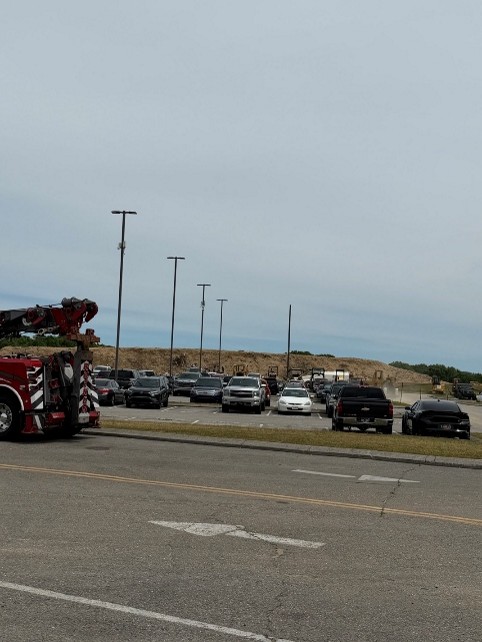
The dirt patch behind the parking lot is the site of Miller’s capacity expansion.
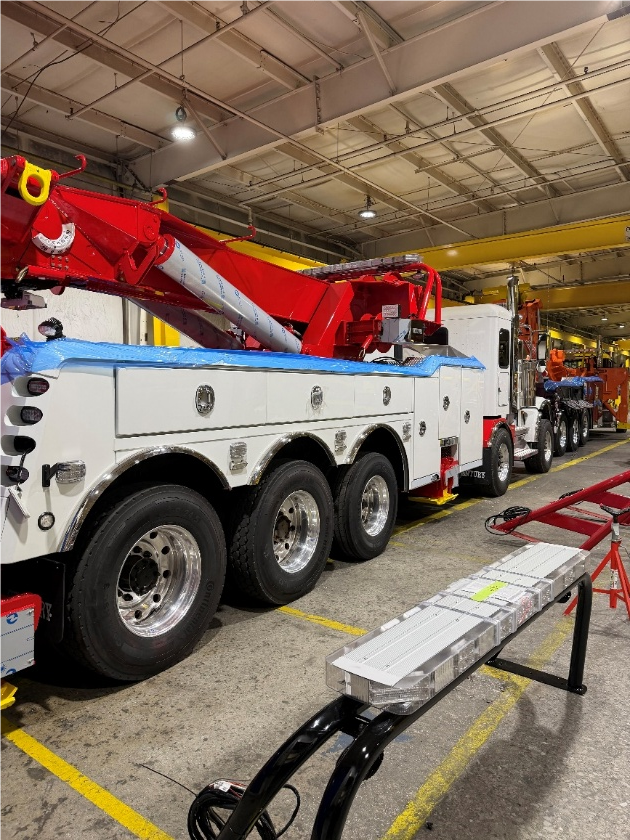
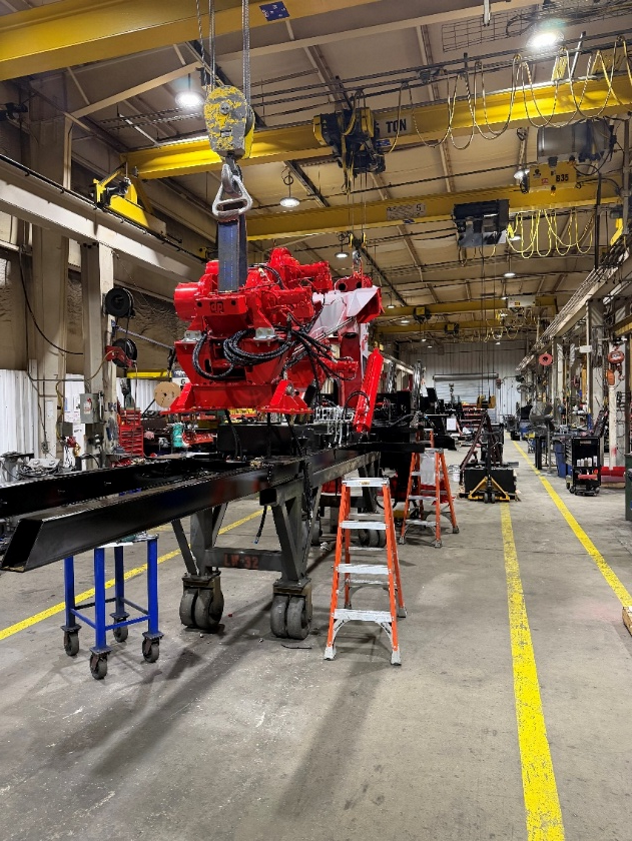
Miller uses an assembly line process to build the tow trucks. Management pointed to several areas where additional space could improve workflow and efficiency.
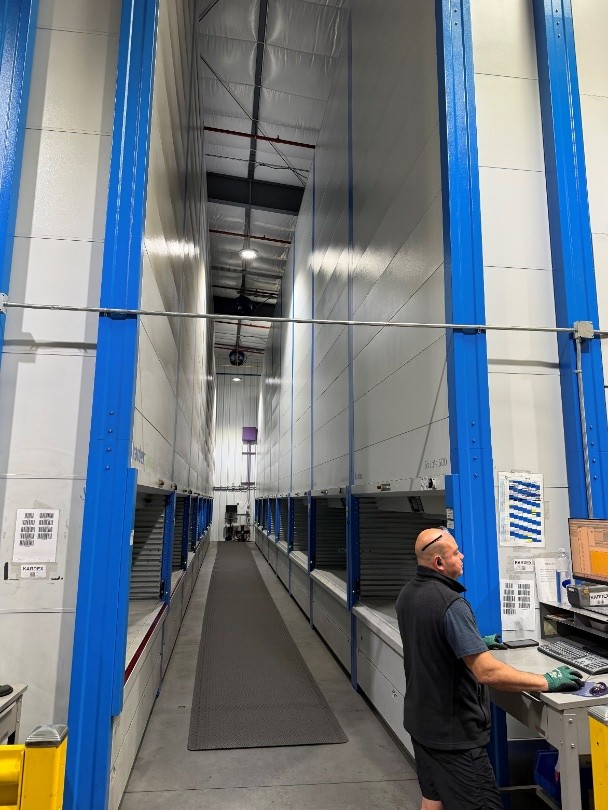
MLR’s Kardex system allows them to store and retrieve thousands of parts and SKUs in a compact footprint. An example of how the company is trying to maximize the current facility.
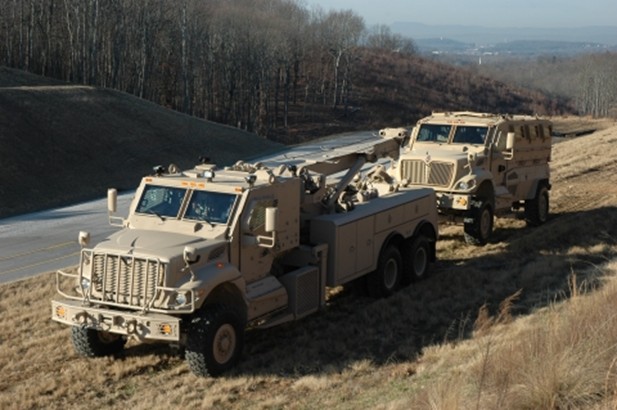
This image shows one of Miller's military wreckers.


©2026 Heartland Advisors | 790 N. Water Street, Suite 1200, Milwaukee, WI 53202 | Business Office: 414-347-7777 | Financial Professionals: 888-505-5180 | Individual Investors: 800-432-7856
Past performance does not guarantee future results.
Investing involves risk, including the potential loss of principal.
There is no guarantee that a particular investment strategy will be successful.
Value investments are subject to the risk that their intrinsic value may not be recognized by the broad market.
As of 5/27/2026 Heartland Advisors, Inc., on behalf of its clients, held approximately 1.32% of total shares outstanding of Miller Industries (MLR).
Portfolio Holdings subject to change.
Economic predictions are based on estimates and are subject to change.
Small-cap securities are generally more volatile and less liquid than those of larger companies.
Statements regarding securities are not recommendations to buy or sell.
Heartland’s investing glossary provides definitions for several terms used on this page.